Moving in: the home security basics worth doing first
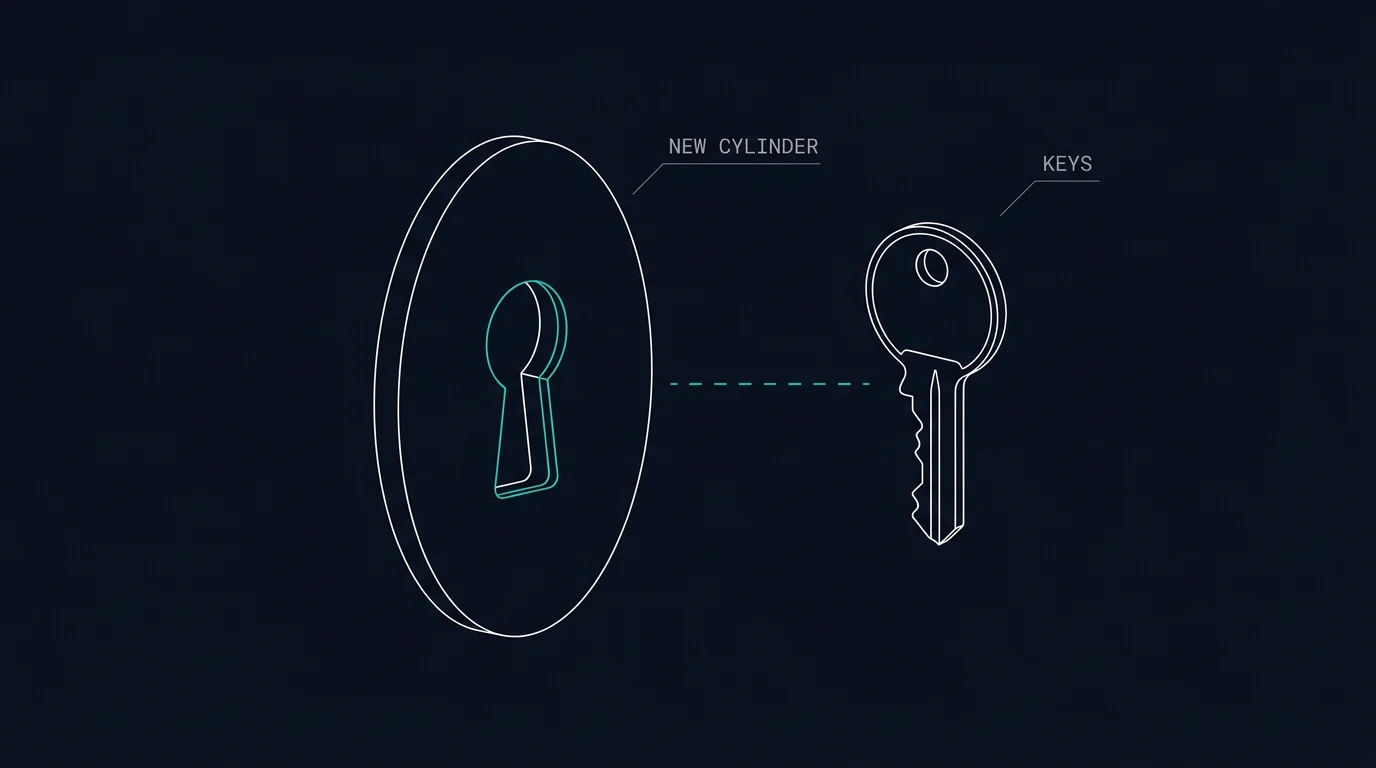
Getting the keys is the point where security stops being theoretical. This guide covers the handful of things worth doing in the first weeks, the free official guidance to read before buying anything, and the data protection rules that apply to cameras which can see past your boundary.
First, the free advice
Before spending anything, read the official material — it is more specific than most product marketing and it is written by people who deal with the consequences.
- Police.uk crime prevention pages cover protecting your home, your building and your outside space: doors and windows, lighting, garden boundaries, shed and garage security, and what to do when you are away.
- Secured by Design is the official police crime prevention initiative. It publishes technical standards — for door and window security, locks and cylinders — and a list of products certified to its Police Preferred Specification. If you are choosing new doors or windows, this is the reference to ask suppliers about.
- Your local force's crime prevention officer can sometimes visit or advise, particularly for a property with an unusual layout or a history of incidents.
The first fortnight
Change the locks. You do not know who else has a key. A locksmith can replace cylinders or rekey locks, and can check that what is fitted meets current standards at the same time. Ask for the cylinder rating: TS007 3-star for euro-profile cylinders, BS 3621 for mortice locks on timber doors. On a new-build, check whether the door is a certified doorset meeting PAS 24 before replacing anything.
Check every opening, not just the front door. Patio and bi-fold doors, back doors, garage side doors, ground-floor windows and any outbuilding. A well-secured front door next to a garden gate with a worn latch is the wrong way round.
Sort the keys and the post. Decide where keys live and avoid the obvious hiding places. Set up a redirect with Royal Mail for at least three months, and tell the utility companies — post accumulating in a hallway seen through the letterbox tells anyone watching that the house is empty.
Look at the lighting. PIR-activated lighting at the front and rear entrances is inexpensive and is one of the measures police guidance consistently recommends. Solar units avoid wiring but are less reliable in winter.
Meet the neighbours. Not a security measure in a technical sense, but the most effective informal one: someone who knows your car and your routine notices when something is wrong.
Keep the paperwork. Note serial numbers and take photographs of valuable items. If you register appliances with the manufacturer, the registration often doubles as proof of purchase.
Security when you go away
- Use timers on a couple of lamps rather than leaving one on permanently.
- Cancel deliveries or have them sent elsewhere.
- Ask a neighbour to put the bin out and back.
- Avoid announcing dates on social media until you are home.
- Leave a car in the drive if you can, or ask a neighbour to use the space.
Keeping a car at home
If a car sits on a driveway or in the street, the measures that work are physical and visible. A steering wheel lock or a wheel clamp takes time to defeat and can be seen from the road. A lock over the diagnostic port under the dashboard closes a route that does not need a key at all. For keyless entry, keeping the key away from the front door — in a screened pouch or a metal tin, not on a hook in the hall — shortens the range at which its signal can be picked up. A retractable bollard across a driveway is the most effective single measure against a car being driven away, and also the most disruptive to install.
The police publish vehicle crime prevention advice free of charge, and it is worth reading before buying anything.
Cameras, doorbells and the boundary
Video doorbells and home cameras are now normal, and the law around them is often misunderstood in both directions.
The ICO's guidance for householders explains that a camera covering only your own property is generally outside data protection law, because it falls within the domestic purposes exemption. Where a camera records beyond your boundary — the pavement, a shared driveway, a neighbour's garden or windows — the ICO's advice is to minimise the intrusion: change the angle, use the app's privacy masking, and consider a sign so people know they may be recorded. Footage that includes other people should be kept only as long as needed, and a request from someone shown in it is worth taking seriously.
The ICO publishes a home CCTV section for the public, and a separate guide for organisations. If a neighbour's camera is a concern, the ICO suggests starting with a conversation; councils and the ICO are the escalation routes.
A practical note on installation: mounting height and angle decide most of this. A doorbell camera 1.5 metres up looking at the path sees far less of next door than one under the eaves angled across the street.
Standards worth asking about
If you are buying hardware, these are the terms to look for, and they are all published by the bodies named:
- TS007 3-star — replacement cylinders resistant to snapping, bumping and picking.
- BS 3621 — mortice locks on timber doors.
- PAS 24 — complete doorsets and windowsets tested for weather and attack resistance.
- Police Preferred Specification — Secured by Design's certification for products that meet its standards.
Professional installation matters as much as the hardware: a certified lock fitted badly, or a door that no longer closes squarely, weakens the whole assembly.
Alarms and monitored systems are a personal choice. If you go that way, ask about the maintenance contract, response arrangements, and what happens if the monitoring subscription lapses — a system nobody maintains is a box on the wall.
What to do next
Read the police.uk home protection guidance, book a locksmith for the first week, and walk the boundary of the property yourself looking for the way in you would choose if you were not you. Then decide whether anything beyond locks, lighting and a conversation with the neighbours is worth the money for this particular house.
Questions
Should I change the locks when I move in?
It is a common and sensible first step, because you cannot know how many copies of the keys exist or who holds them: previous owners, tenants, cleaners, relatives, an agent, or a builder. A qualified locksmith can change the cylinder on a euro-profile door, or rekey a mortice lock, and you keep the same hardware where it is in good condition.
What does TS007 3-star mean on a door lock?
TS007 is the industry standard for replacement cylinders, and three stars is its top rating for resistance to attack methods such as snapping, bumping and picking. A 3-star cylinder is often paired with a 1-star handle for a combined rating. Mortice locks on timber doors are instead rated to BS 3621. Both are the specifications police crime prevention advice tends to cite.
Can my video doorbell record the pavement?
The ICO's guidance for householders says a camera aimed only at your own property is normally outside data protection law. Where a camera captures beyond your boundary, such as a public footpath, a shared drive or a neighbour's garden, the ICO advises minimising that intrusion: angle the camera, mask the area in the app, and consider signage so people know they may be recorded.
Is a burglar alarm worth fitting?
It is a personal choice, and a working alarm is one layer rather than a solution. What the police consistently emphasise is the physical layer: locks that meet current standards on the doors and windows that would be used to get in, and good lighting at the entrances.
Where can I get free security advice?
Police.uk publishes crime prevention guidance covering the home, your building and your garden, and local forces offer similar pages. Secured by Design, the official police crime prevention initiative, publishes specifications for doors, windows and locks, and a searchable list of products that meet its Police Preferred Specification.